Key Takeaways
NVIDIA guiding to $108 billion for the quarter ahead after a $96.2 billion quarter is a major demand signal.
The AI GPU compute demand spike: AI infrastructure buildouts kept scaling through 2026, and every supply input tightened at the same time. There's more money chasing GPUs than there is silicon to sell.
AI server price growth begins upstream: HBM and conventional DRAM both repriced hard, and full system prices followed. The bottleneck moved upstream of the chip.
The GPU allocation queue: Order position and prepayment decide who gets served. This year, an approved budget and a delivery date are two entirely different metrics.
Power-constrained compute deployment: Energized megawatts arrive on permitting and interconnection schedules that a purchase order can’t accelerate.
Unprecedented GPU access scarcity: The market is clearing on delivery, changing what a reservation is for, what an installed fleet is worth, and which number belongs in next year's plan. The scope of GPU scarcity is never-before-seen thanks to the constantly increasing demand for high tier AI GPU computing.
AI Infrastructure Demand Keeps Getting Revised Upward
AI infrastructure demand now arrives as capital already committed, contracts already signed, and guidance the suppliers publish themselves.
The five largest buyers moved from roughly $380 billion in 2025 to a planned $660 billion to $690 billion for 2026, close to a doubling inside twelve months. Spending on that curve reflects capacity already sized and ordered.
In the six months before March 2026, hyperscalers signed compute leases potentially worth more than $100 billion, most of them on five-year terms.
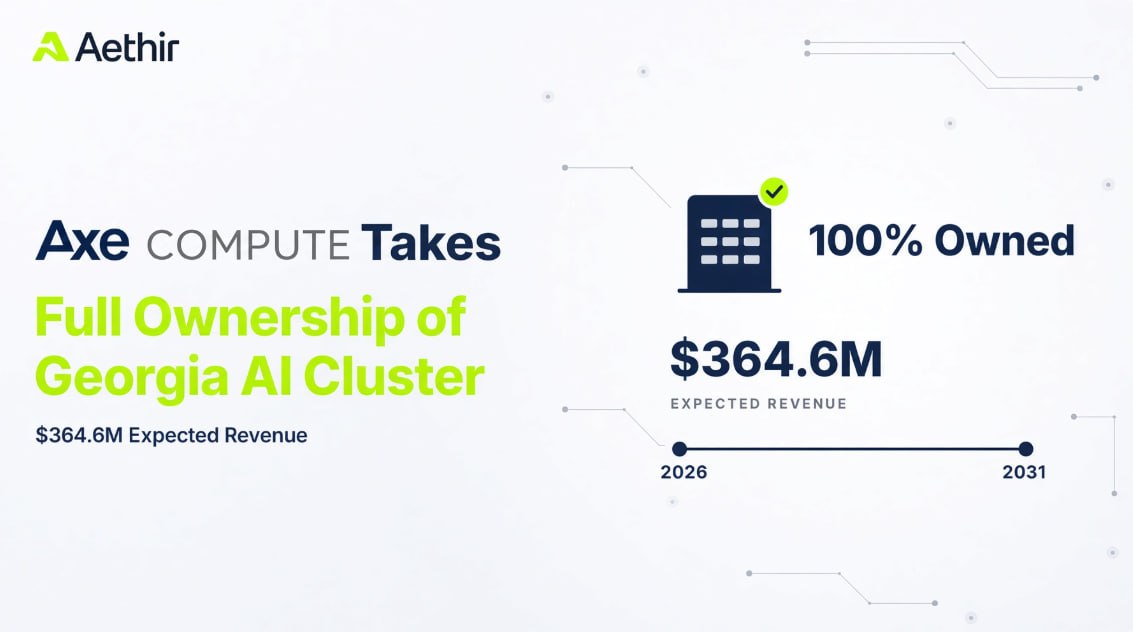
Furthermore, buyers are increasingly funding capacity before it exists, as part of a prepayment model for compute infrastructure buildout, as seen in the recent Axe Compute prepayments announcement. Money sent in advance is a hard demand signal for AI compute.
The AI Server Price Increase Starts With Memory
The supply side moved on price first. Recent reporting said NVIDIA had warned its largest customers to expect increases above 15% on systems shipping in early 2027, with memory named as the driver.
Conventional DRAM ran up 90% to 95% in the first quarter of 2026 and roughly 60% again in the second, with another 13% to 18% guided for the third quarter and NAND at 10% to 15%. When DRAM contract prices move on that scale, everything built around them reprices behind it.
Also, HBM (high-bandwidth memory) pricing continues to soar as a key expense for AI GPU compute buildouts. A current rack-scale system carries more than 20TB of high-bandwidth memory, and next-generation packages carry up to 288GB of HBM4 each.
A GPU compute system that costs 15% more, financed over the same asset life at the same utilization, can’t produce a GPU hour at the old rate.
The GPU Allocation Queue and Compute Supply Constraint
Price is the visible constraint, while allocation is the binding one in the current AI GPU compute market. When supply is allocated rather than sold, what decides who gets served stops being budget and starts being order position, volume history and how early the commitment was made. Buyers were told to expect higher prices months before the hardware ships, which is what a compute supply constraint looks like from inside a procurement cycle.
Systems landing in early 2027 are already being repriced against next-generation configurations. A queue that long turns procurement into forecasting, because the terms get agreed before the hardware exists.
Paying up front has become as much a financing mechanism as a purchasing one, a shift covered in our deep dive into the Axe Compute prepayment model. Cash in advance is the clearest signal a buyer can send into a GPU allocation queue.
Additionally, order position rewards buyers who were already large, so the distance between the biggest committers and everybody else widens with each cycle. Smaller buyers respond by routing around the primary queue, through resellers, brokers, and capacity aggregated from independent operators, which is where Aethir’s decentralized GPU cloud model sits in this market.
Power Constrained Capacity Caps Everything Downstream
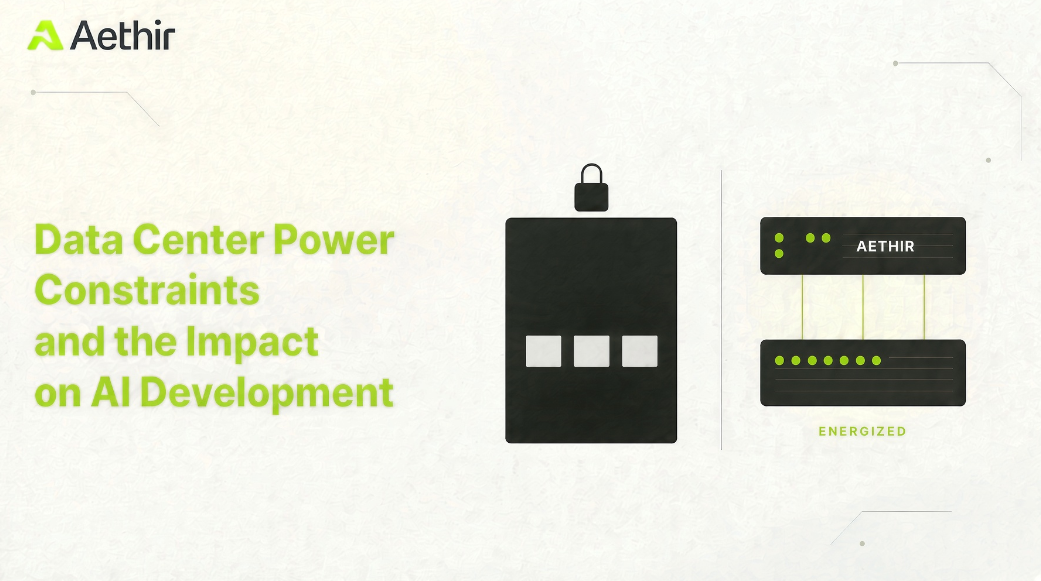
Silicon and memory are cyclical, while power is structural, making electricity the main constraint on deploying GPU capacity. A chip you can buy and can’t energize isn’t capacity, and power-constrained capacity is the one limit that doesn’t respond to a larger purchase order. It also explains why the gap between announced and delivered supply keeps widening.
The AI Data Center CapEx That Can’t Be Energized
Announced gigawatts aren’t contracted gigawatts: Several of the largest power announcements of 2026 arrived with a headline figure and no signed commitment behind them. Power-constrained capacity gets underestimated precisely because announcements are counted as supply.
AI data center CapEx is sized for decades: Financing 200 GW of new capacity between 2026 and 2032 has been estimated at roughly $8.2 trillion, near 2.8% of GDP a year. Capital on that scale moves at the speed of permitting and interconnection, which often doesn’t align with actual compute orders for active AI projects leading to power grid bottlenecks.
The electricity power grid path sets the compute deployment roadmap: Where a site lands and how fast it can draw load now shapes delivery more than the accelerator choice does, as we set out in our look at the grid bottleneck for AI compute. Aethir has taken the same route through ACCELERATE, securing access to 10 sites totaling up to 20 MW across the US and Europe.
What Changes When GPU Access Becomes the Scarce Good
NVIDIA guiding to $108 billion for the quarter ahead but it’s also a supply commitment, and the market now clears on whether commitments like that land on schedule.
Rental pricing is set against hardware bought at yesterday's prices, so a compute supply constraint reaches quotes months after it reaches components. The realistic expectation is that the gap closes, not that the pressure disappears.
Furthermore, when system prices are rising ahead of delivery, a reservation is insurance against allocation as much as it’s a lower rate. That alone widens the spread between reserved and on-demand pricing.
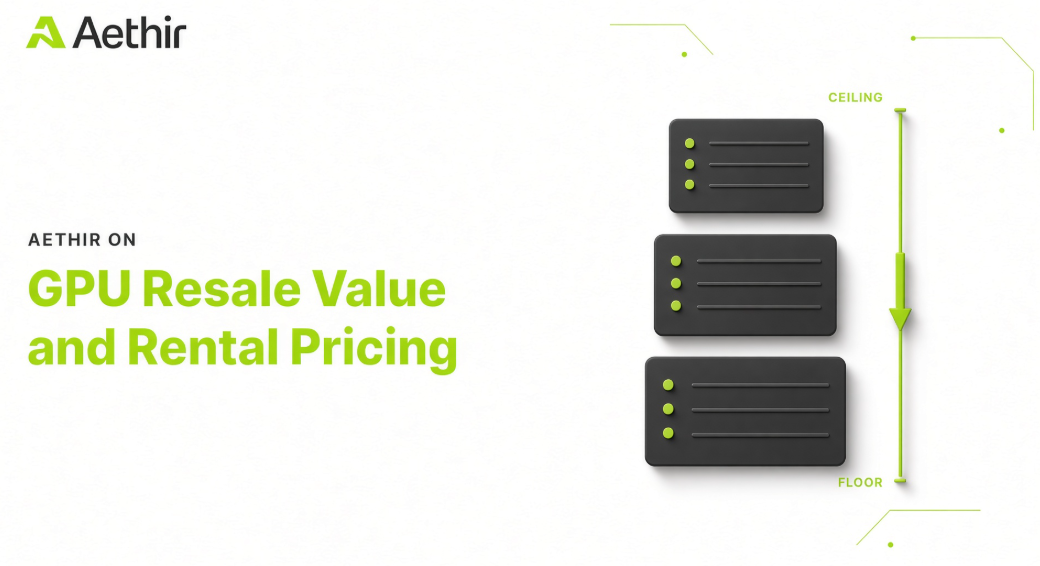
Also, rising replacement cost lifts what an existing fleet is worth, which we covered in our analysis of what a used GPU is worth. In a tight market, the cheapest compute available is usually the compute somebody already owns and isn’t fully using.
In a forward-looking tone, most of this isn’t permanent. Memory capacity does get added, and a pause in AI infrastructure demand would probably unwind the price move quickly. However, power-constrained capacity is the part that won’t resolve on a component cycle.
Demand that keeps being revised upward has met a supply chain where memory, allocation, and power all tightened inside the same quarter, and the market is clearing on delivery rather than on price.
Aethir works the aggregation side of that problem, pooling capacity that already exists and already runs, which is a different position from ordering new systems into a queue. With our newly launched ACCELERATE program, we’re also entering the AI data center buildout sector, but with a smarter approach, deploying 10 mid-sized data centers across the US and Europe, based on already existing demand and infrastructure capabilities,
For anyone planning the next four quarters, GPU access is the variable worth building the plan around.
FAQ
Why is there an AI server price increase in 2026?
Reporting in August 2026 said NVIDIA had warned large customers of an AI server price increase above 15% on systems shipping in early 2027, with memory named as the cause. Conventional DRAM and NAND both ran up sharply through the year, and high-bandwidth memory is one of the largest cost lines in a modern accelerator rack.
What is a GPU allocation queue?
A GPU allocation queue forms when suppliers allocate scarce hardware instead of selling it freely. Position is set by order timing, volume history, and prepayment rather than by willingness to pay. That’s why a buyer with an approved budget can still wait several quarters for delivery.
How do DRAM contract prices change AI compute costs?
DRAM contract prices flow into server bills of materials, and server prices flow into the hourly rate a provider needs to break even. When DRAM contract prices rise by double digits quarter after quarter, the effect reaches rental pricing with a lag of several months rather than immediately. The lag is why quoted rates can look stable while the underlying cost base has already moved.
What does power constrained capacity mean for deployment timelines?
Power constrained capacity means the limiting factor is energized megawatts rather than available hardware. Sites wait on permitting, interconnection studies, and grid upgrades, so the electrical path usually sets the deployment timeline rather than chip lead times.