Key Takeaways
Rapid growth: Tokenized stocks reached roughly $963 million in January 2026, up from $32 million a year earlier. By late September, the tracked total passed $3 billion.
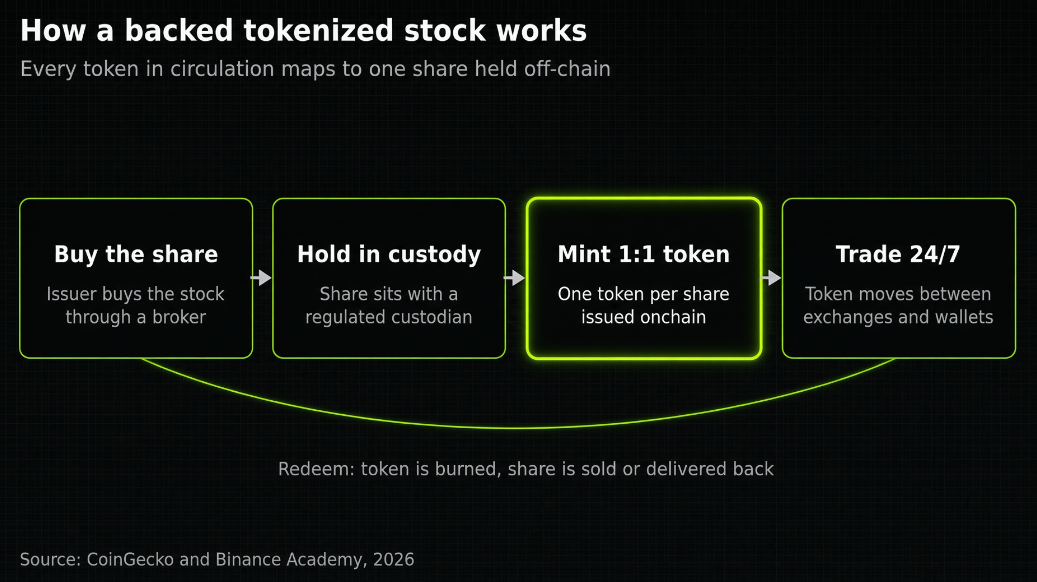
Simple mechanics: A backed token maps one-to-one to a share held by a regulated custodian. That’s how tokenized stocks work on the major venues: buy the share, hold it, mint the token, trade it, and burn it on redemption.
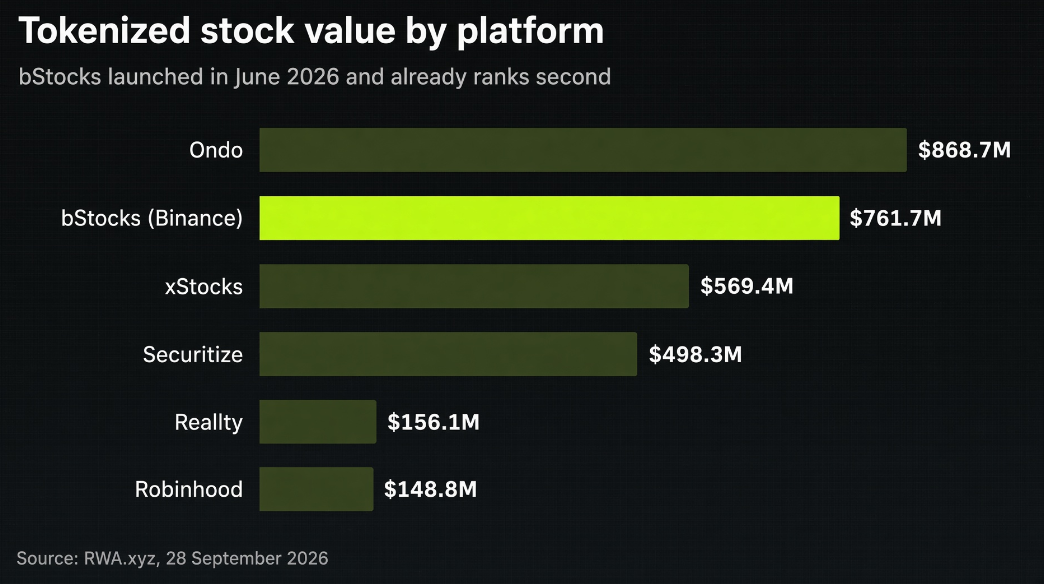
Key tokenized stock players: Ondo, Binance bStocks, xStocks, Securitize, and Robinhood lead the tokenized stock sector. bStocks launched in June 2026 and already holds $761.7 million.
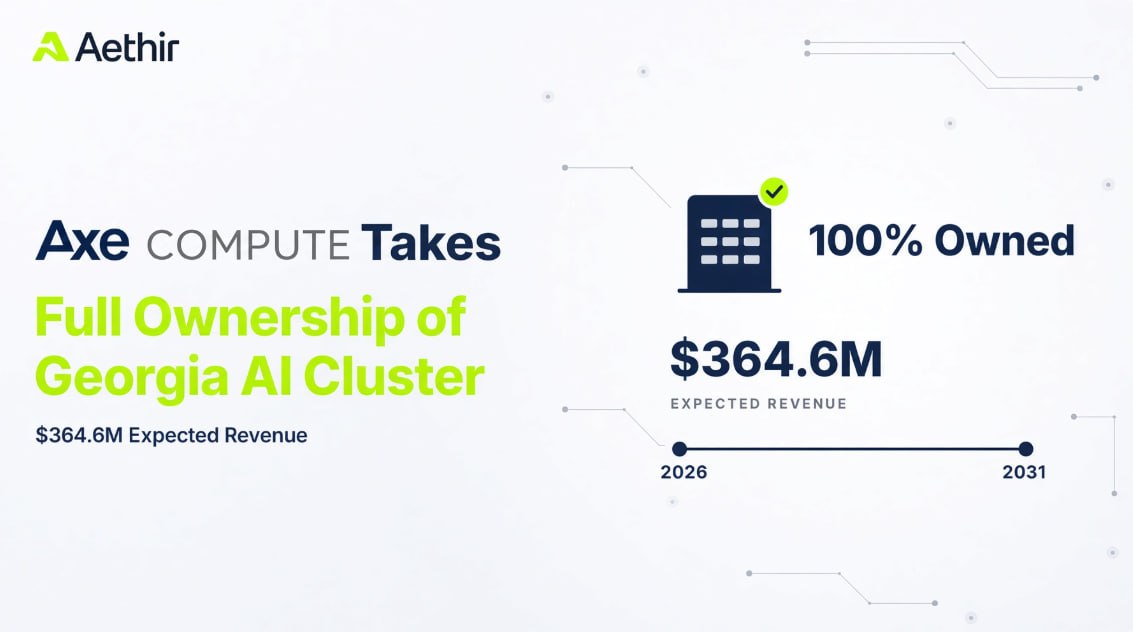
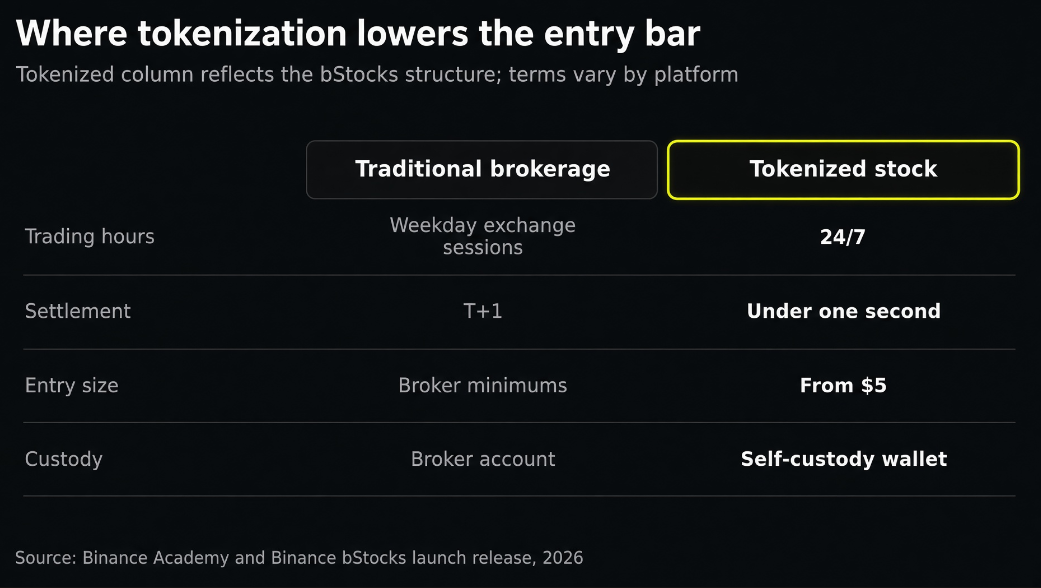
Lower entry barriers: Tokenized equities trade around the clock, settle in under a second on some venues, and often start from $5. AI infrastructure names are arriving too, with Axe Compute now listed on Binance as a bStock.
Why Tokenized Stocks Took Off in 2026
Tokenized stocks reached roughly $963 million in market value in January 2026, a near 3,000% annual jump from $32 million a year earlier. Two factors powered this massive growth. Crypto exchanges wanted a product their users could trade on a Sunday, and regulators started writing rules instead of warnings. On September 17, 2026, the SEC issued an Innovation Exemption for tokenized stocks that lets approved venues trade tokenized US-listed shares onchain for five years.
What Real-World Asset Tokenization Puts Onchain
Backed spot tokens: These hold one real share in custody for every token issued, which gives holders the strongest claim on the stock. Ondo, xStocks, and bStocks all use it.
Perpetual futures: These track a stock price through oracles without holding any shares. CoinGecko counts $524.8 billion in RWA perps volume in Q1 2026 alone, which makes them the busiest instrument by trading volume.
Synthetic tokens: These use smart contracts to mirror a price with no share behind them. They’ve become rare, because a price feed is easier to manipulate than a custody account.
How Tokenized Stocks Work
Here’s how tokenized stocks work on a backed platform. An issuer buys the share through a broker, parks it with a regulated custodian, and mints one token against it. On Binance, each bStock is backed 1:1 by a US share, and eligible users can convert between the two at no cost. Redemption runs the loop in reverse. The token is burned, and the share is released.
Always-on markets: The token moves on crypto rails, so 24/7 stock trading doesn’t wait for the opening bell. The custodian is what keeps a Saturday price tied to a real share.
Settlement speed: A bStock transfer settles in under one second, against the T+1 cycle that governs US equities. Less cash sits idle.
Composability: Backed tokens can move straight into DeFi, and xStocks were built for collateral from launch day. Lending protocols then price the tokenized share.
The Tokenized Stock Platforms Leading the Market
RWA.xyz tracks $3.14 billion in distributed tokenized stock value across 4.00 million holders as of September 28, 2026. Holder count rose 67% in 30 days.
A handful of tokenized stock platforms hold most of the value.
Ondo, bStocks, xStocks, Securitize, Reality, and Robinhood round out the top six. Equities are following Treasuries and private credit into the wider RWA sector.
Tokenized stocks are becoming a standard product line for the largest crypto exchanges. Binance added bStocks in June, and OKX rolled out 40+ tokenized stocks built on xStocks in July before passing 70 stocks and ETFs in September.
Crypto.com followed in August with derivatives on 1,500 US equities for EEA users, with positions from $1. ICE, the parent of the New York Stock Exchange, took a stake in OKX at a $25 billion valuation to bring tokenized NYSE-listed equities to its 120+ million users. Volume is following the listings.
Tokenized equity perpetual futures grew from $831 million a month in July 2025 to $34 billion in May 2026, and CoinGecko data puts Binance at 43.65% of that market.
Onchain venues carry real flow too, with DEXs clearing $20.9 billion in tokenized stock trades over the past 30 days and Uniswap handling more than 60% of it. Exchanges already run 24/7 order books, wallets, and custody, so listing a stock works much like listing a token, and traders get equities and crypto in one account. That fit makes tokenized stock trading a lasting use case for both CEX and DEX platforms, well beyond the launch campaigns.
Where bStocks and Onchain Stocks Trade
Ondo launched on Ethereum and BNB Chain in late 2025, then brought 200+ tokenized stocks to Solana in January 2026. Its tokens track dividends, and a Broadridge partnership added onchain proxy voting.
xStocks from Backed trade on Kraken and Bybit and circulate as onchain stocks on Solana. bStocks are BEP-20 tokens on BNB Chain, issued by Binance affiliate BTech Holdings under prospectuses approved in Abu Dhabi.
Robinhood runs its own chain for tokenized stocks. Real-world assets on it jumped fivefold to about $70 million in under two weeks this July, led by GameStop at $26.6 million in daily volume.
Why Tokenized Equities Are Easier to Access
Buying a US share from outside the US usually means opening a foreign broker account, meeting its minimums, and trading in New York hours. Tokenized equities replace most of that with an exchange account or a wallet. Binance bStocks start from $5 and trade around the clock. Eligibility still varies. bStocks, for one, are closed to US users.
GPU Compute Tokenization and the AGPU bStock
A $5 entry point makes fractional shares the default, which matters most for high-priced names. Dividends on bStocks are reinvested automatically rather than paid out in cash.
Binance listed Axe Compute as the AGPUB bStock on September 23, 2026, so a Nasdaq-listed GPU infrastructure company now trades onchain around the clock. CoinMarketCap tracks the AGPUB token as a fully collateralized BEP-20 asset with 1:1 conversion rights. Our recent blog about the Axe Compute 2026 story covers the contracts behind the ticker.
The logic that puts a share onchain also works for the hardware behind AI. Aethir has worked with Plume and GAIB on GPU compute tokenization, turning GPU capacity into an asset that can be priced and traded onchain. Stocks proved the custody model first, and compute is next in line.
Tokenized stocks give investors outside the US a faster, smaller, and always-open route into US equities. Custody, rights, and eligibility differ by platform. However, the pattern is settled: real-world asset tokenization works when every token maps to something real and verifiable. Tokenized equities set that standard. Compute is one of the next assets that has to meet it.
FAQ
What are tokenized stocks?
Tokenized stocks are blockchain tokens that track the price of a listed company share. Backed versions hold one real share in custody per token, which makes them a form of real-world asset tokenization. Synthetic tokens and perpetual futures follow the price without owning the stock.
How do tokenized stocks work?
An issuer buys shares, holds them with a regulated custodian, and mints matching tokens onchain. That’s how tokenized stocks work on Ondo, xStocks, and bStocks, and redemption burns the token to release the share. Rights such as dividends and voting vary by platform.
Can you buy fractional shares with tokenized equities?
Yes, on most platforms. Binance bStocks start from $5, so one purchase can cover a small slice of a high-priced share. Check the terms on each platform, since minimums and dividend handling differ.
Are tokenized stock platforms regulated?
Rules vary by platform and region. bStocks run on prospectuses approved by the Abu Dhabi Financial Services Regulatory Authority, and in the US the SEC Innovation Exemption of September 17, 2026 opens a five-year path for approved venues. Availability still depends on where you live, and US users can’t buy bStocks.
Disclosure
Aethir Foundation is Axe Compute's largest shareholder, through its 2025 treasury transaction. We cover Axe as an interested holder. This article reflects Aethir's views and is not investment advice. For official company information, see Axe Compute's SEC filings (CIK 0001446159) and investors.axecompute.com.
Nothing in this article should be relied upon as a guarantee of future performance or results.